
A hepatitis B diagnosis raises profound questions about parenthood. The answers are more hopeful – and more medically grounded – than most people realise.
For a couple who has just received a hepatitis B diagnosis – or who has been living with one for years – the question of whether they can safely have a child often feels unanswerable. Will treatment be available to them? Is IVF safe with hepatitis B? What is the risk to a future child? These are not abstract fears. They are practical, urgent questions that deserve precise, evidence-based answers.
On World Hepatitis Day 2026, it is worth addressing those questions directly – because India carries one of the highest hepatitis B burdens in the world, and because the medical community’s ability to support hepatitis B positive individuals through fertility treatment has advanced considerably.
Hepatitis B in India: The Scale of the Issue
India is classified as an intermediate-to-high endemic zone for hepatitis B virus (HBV). Approximately 40 million Indians are estimated to be chronic HBV carriers – meaning the virus persists in their blood long-term, even when they feel entirely well. Many of these individuals are of reproductive age, diagnosed incidentally during routine health checks or pre-marital testing, and are otherwise healthy.
The condition exists on a spectrum. Some HBV carriers have inactive disease with low or undetectable viral loads and normal liver function. Others have chronic active hepatitis B with ongoing liver inflammation. The clinical picture – viral load, liver function tests, HBeAg status – determines both the medical management required and the specific precautions needed during fertility treatment.
Can Hepatitis B Positive Couples Undergo IVF?
The short answer is yes – with appropriate protocols, laboratory precautions, and medical oversight. IVF is not contraindicated in individuals who are HBsAg positive. Fertility treatment can be conducted safely for the patient, and with proper measures, the risk of transmission – to the partner and to a future child – can be managed effectively.
Important distinction: There is a fundamental difference between an HBV carrier with inactive disease and low viral load, and someone with high viral replication and active liver disease. The fertility approach differs between these groups, and a hepatologist’s input is essential before IVF begins.
Protecting the Unaffected Partner
When only one partner is HBsAg positive and the other is negative, the first priority before any fertility treatment is ensuring the unaffected partner is vaccinated against hepatitis B and has confirmed immunity (anti-HBs titre above 10 IU/L). This vaccination course should be completed at least one to two months before treatment begins, with immunity confirmed by blood test.
In discordant couples – where one partner is positive and the other negative – IVF laboratories with appropriate biosafety protocols must handle gametes and embryos to prevent any cross-contamination. This typically means segregated processing of samples and the use of dedicated laboratory consumables. Reputable IVF centres are equipped to manage discordant couples without additional risk to either the unaffected partner or laboratory staff.
The Risk of Transmission to the Child - and How It Is Prevented
One of the most significant concerns for HBsAg positive mothers is vertical transmission – the passing of the virus to the baby during pregnancy or at birth. Without any preventive intervention, the risk of transmission from a chronically infected mother to her newborn is estimated at 10 to 90 percent depending on the mother’s viral load and HBeAg status. This risk is the reason hepatitis B vaccination and immunoprophylaxis for newborns exist.
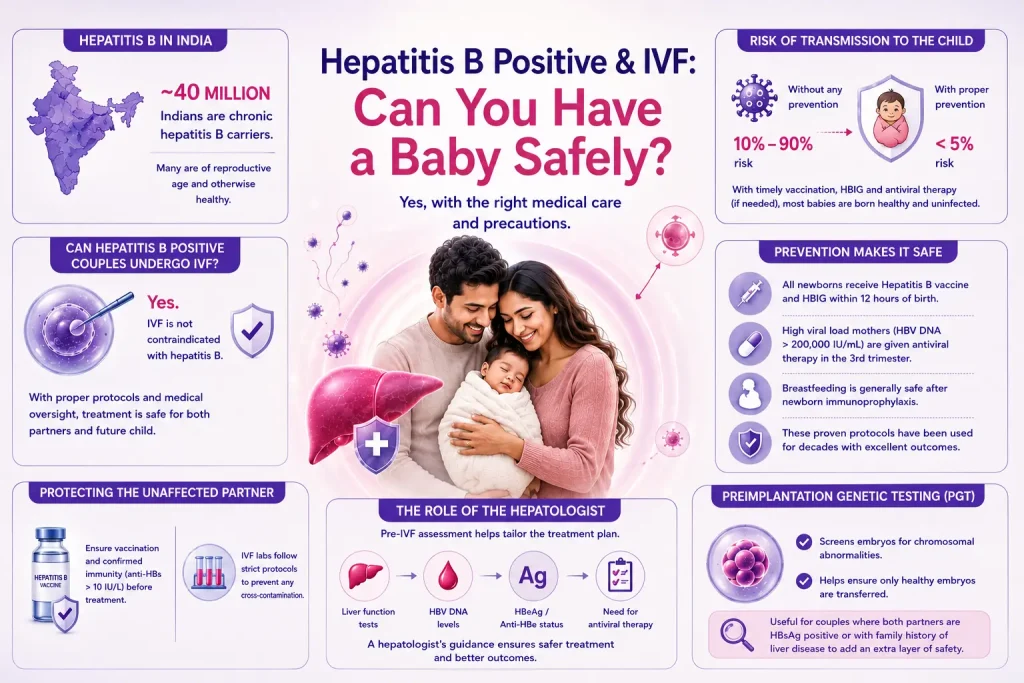
When appropriate prevention protocols are followed, the risk of mother-to-child transmission drops to below 5 percent – and in cases where antiviral therapy is used during the third trimester for high viral load mothers, even lower.
- All newborns born to HBsAg positive mothers receive the hepatitis B vaccine and hepatitis B immunoglobulin (HBIG) within 12 hours of birth
- High viral load mothers (HBV DNA above 200,000 IU/mL) are typically started on antiviral therapy in the third trimester to reduce transmission risk further
- Breastfeeding is generally considered safe when newborn immunoprophylaxis has been administered
These protocols are not experimental – they are standard obstetric care for HBsAg positive mothers and have been in place for decades. The majority of children born to HBV positive mothers with appropriate management are uninfected and can be vaccinated to ensure lasting immunity.
Preimplantation Genetic Testing: An Additional Layer of Protection
For couples where both partners are HBsAg positive, or in cases where one or both partners have a family history of hepatitis B related liver disease, preimplantation genetic testing (PGT) can be used to evaluate embryos before transfer. While hepatitis B is a viral infection rather than a genetic condition, PGT can screen for any co-existing hereditary conditions that may affect the child’s health, and the overall embryo selection process ensures only chromosomally normal embryos are transferred.
The Role of the Hepatologist Before and During IVF
For any individual with hepatitis B considering IVF, a pre-treatment consultation with a hepatologist is strongly recommended. This assessment should include liver function tests, HBV DNA quantification, HBeAg and anti-HBe status, and an assessment of whether antiviral therapy is indicated. Where the fertility specialist and hepatologist work in coordination, the IVF treatment plan can be adapted to the patient’s specific virological status, making the process both safer and better supported.
At Nishant IVF and Fertility Centre in Jaipur, we routinely work with hepatitis B positive couples and have established protocols for managing both discordant and concordant HBV positive couples through IVF safely. A positive hepatitis B status is not a barrier to parenthood – it is a medical variable that, when properly managed, allows fertility treatment to proceed with appropriate care.
If you or your partner has been diagnosed with hepatitis B and you are wondering about your options, a specialist fertility consultation is the right first step. You deserve clear answers, not uncertainty.
Hepatitis B and IVF : FAQs
Yes. Hepatitis B positive individuals can undergo IVF with appropriate laboratory protocols, biosafety measures, and medical oversight. The condition is not a contraindication to fertility treatment. The specific approach depends on the individual’s viral load, liver function status, and whether the partner is also HBsAg positive or negative.
Yes. In discordant couples – where one partner is HBsAg positive and the other is negative – IVF can be performed safely. The unaffected partner should complete a hepatitis B vaccination course and confirm immunity before treatment begins. The IVF laboratory must have protocols for segregated sample processing to prevent any cross-contamination.
Without preventive measures, hepatitis B can be transmitted from mother to child around the time of birth, with risk depending on viral load and HBeAg status. With proper prevention – hepatitis B vaccine and HBIG given to the newborn within 12 hours of birth, and antiviral therapy for high viral load mothers – the transmission risk drops to below 5 percent.
Some research suggests that high HBV viral loads may be associated with reduced sperm motility and increased sperm DNA damage in male carriers. In female carriers, the direct effect on egg quality is less established, though chronic active hepatitis can affect overall hormonal and metabolic function. These factors reinforce the importance of full virological assessment before IVF.
Yes. A consultation with a hepatologist before fertility treatment is strongly recommended. This assessment determines the current viral load, liver function status, and whether antiviral treatment is needed before or during pregnancy. Coordination between the fertility specialist and hepatologist is the standard of care for HBV positive patients undergoing IVF.
Disclaimer: This article provides educational information about Hepatitis B and IVF and should not replace personalized medical advice. Consult with a qualified fertility specialist for proper evaluation and treatment recommendations specific to your situation.