
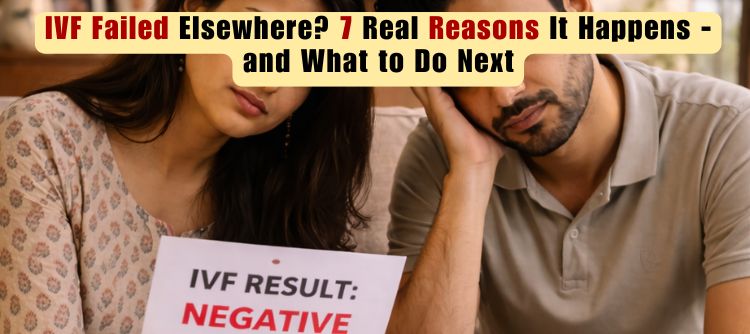
A guide for couples who have been through the heartbreak of a failed IVF cycle and are wondering whether to try again - and where.
You followed every instruction. You took every injection on time. You allowed yourself to hope. And then the call came – the transfer did not work. A failed IVF cycle is one of the most emotionally exhausting experiences a couple can go through. But here is what most clinics do not tell you: a failed cycle is also data. And that data, when properly analyzed, is often the missing piece that leads to the successful pregnancy.
The truth is that IVF failure is rarely random. There are specific, identifiable reasons why cycles fail – and most of them are correctable with the right approach.
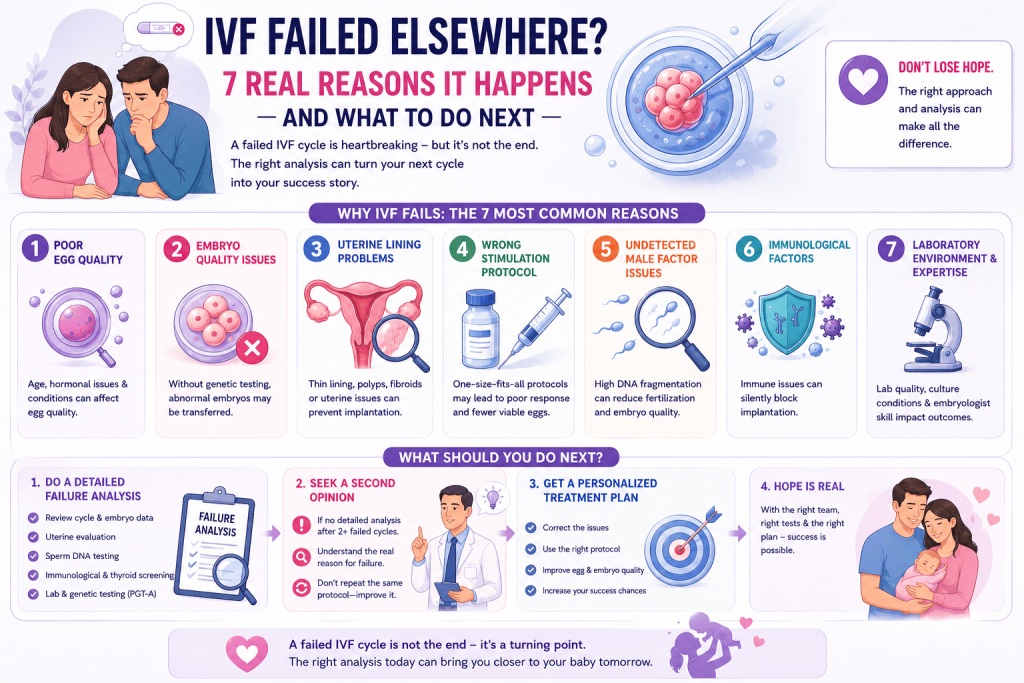
Why IVF Fails: The 7 Most Common Reasons
Understanding the root cause of failure is step one toward a different outcome.
Poor Egg Quality
Egg quality is the single most important factor in IVF success. Age, hormonal imbalances, thyroid issues, and underlying conditions like endometriosis can all compromise egg quality. Many cycles fail because this was not adequately assessed or optimised before stimulation began.
Embryo Quality Issues
Not all embryos that fertilise successfully are chromosomally normal. Without Preimplantation Genetic Testing (PGT), poor-quality embryos may be transferred, reducing the chance of implantation significantly. Clinics that skip this step often see higher failure rates.
Related Article : Why you should consider PGT?
Uterine Lining Problems
Even a perfect embryo cannot implant in a thin or irregular endometrial lining. Polyps, fibroids, a thin uterine wall, or undiagnosed conditions like a T-shaped uterus are frequently overlooked causes of repeated implantation failure.
Wrong Stimulation Protocol
Every woman’s ovarian reserve is different. Using a one-size-fits-all stimulation protocol – rather than one personalised to AMH levels, antral follicle count, and previous response – is a major reason cycles underperform. Poor or excessive stimulation both result in fewer viable eggs.
Undetected Male Factor Issues
Standard semen analysis can look normal while sperm DNA fragmentation is elevated. High DNA fragmentation significantly reduces fertilisation rates and embryo quality. A comprehensive andrology evaluation – not just a basic sperm count – is essential before every IVF cycle.
Immunological Factors
In some cases, the body mounts an immune response against the embryo, treating it as a foreign body. Conditions like elevated NK (Natural Killer) cells, antiphospholipid syndrome, or autoimmune thyroid conditions can silently sabotage implantation – yet these tests are rarely part of a standard IVF workup.
Laboratory Environment and Embryologist Expertise
The quality of the IVF laboratory matters enormously. Temperature, air quality, culture media, and the skill of the embryologist handling your embryos all influence the outcome. Not every clinic invests equally in their laboratory infrastructure.
What Should You Do After a Failed IVF Cycle?
The most important step is a thorough failure analysis – a structured review that goes beyond simply trying the same protocol again. This should include:
- A detailed review of the stimulation response and embryo development data
- Uterine evaluation via 3D ultrasound or hysteroscopy
- Sperm DNA fragmentation testing
- Immunological and thyroid screening
- Assessment of lab culture conditions and embryo grading
- Genetic testing options such as PGT-A for chromosomal screening
Couples who have experienced one or more failed IVF cycles elsewhere often come to us with incomplete information about what actually went wrong. Our approach begins with listening – understanding your full history before recommending anything.
When Should You Seek a Second Opinion?
Key signal: If your clinic has not conducted a detailed failure analysis after two or more failed cycles, it is time to seek a second opinion.
You deserve to understand exactly why your cycle did not work. Not a generic explanation, but a specific, evidence-based review of your unique case. Repeating the same protocol without analysis is not persistence – it is guesswork.
At Nishant IVF and Fertility Centre, Jaipur, failed IVF cases are not a last resort for us – they are a specialisation. Dr. Nishant Dixit and his team conduct a comprehensive second-opinion consultation, reviewing all previous cycle records, investigation reports, and embryology data to build a genuinely personalised treatment plan.
Many couples who had been told they were poor candidates for IVF, or that further treatment was unlikely to succeed, have gone on to have healthy pregnancies after a structured reassessment and revised protocol.
Hope Is Not Lost - But It Requires the Right Next Step
A failed IVF cycle is not the end of your journey. It is a turning point. The couples who go on to succeed are not the ones who gave up, nor the ones who blindly repeated the same approach. They are the ones who found the right team to look deeper.
If you or someone you know has experienced IVF failure, reach out to us. A fresh perspective, the right investigations, and a personalised plan can make all the difference.
Consultation: Book a Failed IVF Second Opinion Consultation at Nishant IVF and Fertility Centre, Jaipur – call +91 99503 03777 or visit www.nishantivfcare.com
Disclaimer: This article provides educational information about failed IVF cycle and should not replace personalized medical advice. Consult with a qualified fertility specialist for proper evaluation and treatment recommendations specific to your situation.