

A diagnosis of ovarian cancer changes everything. For women who have not yet completed their families, the impact extends far beyond the immediate medical battle. One of the most pressing questions many women and their families hold is: is it still possible to have a biological child after ovarian cancer?
The answer, in many cases, is yes. Advances in oncofertility, the intersection of oncology and reproductive medicine, have made pregnancy a realistic goal for a growing number of ovarian cancer survivors. This guide explains how, under what conditions, and what options are available to women in this situation.
Understanding How Ovarian Cancer Affects Fertility
The ovaries perform two essential reproductive functions: producing eggs and secreting the hormones estrogen and progesterone. Ovarian cancer, depending on its type, stage, and treatment, can compromise one or both of these functions.
Types of Ovarian Cancer and Their Fertility Impact
Not all ovarian cancers carry the same risk to fertility. Epithelial ovarian cancers, which are the most common type, typically require more aggressive treatment. Germ cell tumors and borderline (low malignant potential) tumors, which are more frequently diagnosed in younger women, often allow for more fertility-sparing treatment approaches.
How Cancer Treatment Damages Fertility
Chemotherapy drugs, particularly platinum-based agents and alkylating agents, can deplete the ovarian reserve and sometimes cause premature ovarian insufficiency. Pelvic radiation therapy can also reduce fertility by damaging ovarian tissue. Surgical removal of one or both ovaries directly reduces the available egg supply.
Fertility-Sparing Treatment Options in Ovarian Cancer
When ovarian cancer is diagnosed in younger women who wish to preserve their fertility, treatment teams increasingly consider fertility-sparing approaches where medically appropriate:
Unilateral Salpingo-Oophorectomy
In early-stage ovarian cancer, particularly germ cell tumors or borderline tumors, it may be possible to remove only the affected ovary while preserving the healthy one. This approach allows for natural conception or IVF using the remaining functional ovary.
Ovarian Transposition
Before pelvic radiation is administered, the ovaries can be surgically relocated outside the radiation field. This procedure, called oophoropexy, does not guarantee preservation of ovarian function but meaningfully reduces the likelihood of radiation-induced ovarian damage.
Fertility Preservation Before Cancer Treatment Begins
If a woman has not yet started cancer treatment, fertility preservation options should be explored and discussed immediately after diagnosis. Time is often a factor, but most oncology teams can accommodate a short fertility preservation window. The most effective options include:
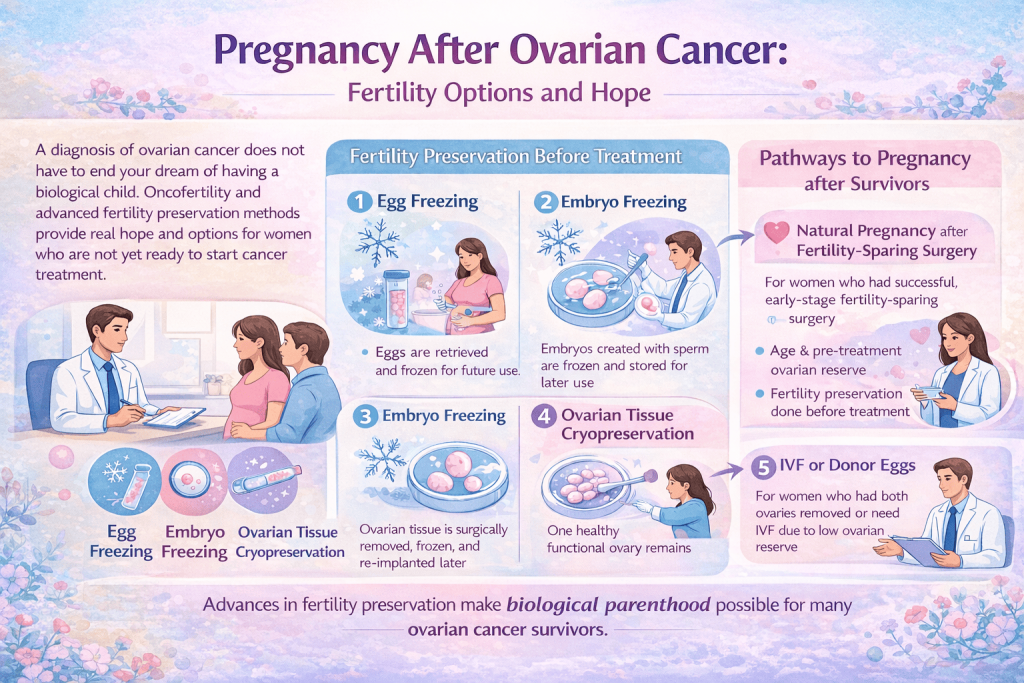
- Egg Freezing (Oocyte Cryopreservation): Eggs are retrieved and frozen before chemotherapy or surgery. Modern vitrification techniques have made this a highly reliable and widely available option.
- Embryo Freezing: For women with a partner or who choose donor sperm, embryos can be created through IVF and frozen before treatment begins, offering a slightly higher success rate per attempt compared to egg freezing alone.
- Ovarian Tissue Cryopreservation: A portion of ovarian tissue is surgically removed, frozen, and later re-implanted after cancer treatment is complete. This technique is increasingly used and has resulted in successful pregnancies worldwide.
Can You Conceive After Ovarian Cancer Treatment?
The possibility of natural or assisted pregnancy after ovarian cancer treatment depends on several key factors:
- Type and stage of cancer at the time of diagnosis
- Specific treatment received, including type of surgery, chemotherapy agents, and radiation
- Age at the time of treatment and pre-treatment ovarian reserve
- Whether fertility preservation was performed before treatment
- Whether one healthy and functional ovary remains
For women who had early-stage ovarian cancer and underwent fertility-sparing surgery, natural pregnancy has been documented in published medical literature. For women who had both ovaries removed, options include using previously frozen embryos or eggs, or pursuing IVF with donor eggs.
IVF After Ovarian Cancer: What to Expect
Women pursuing IVF after ovarian cancer face unique clinical challenges. Ovarian stimulation requires functioning ovarian tissue with an adequate follicular reserve. If the remaining ovary has been affected by chemotherapy or radiation, the response to stimulation medications may be diminished.
A thorough evaluation including AMH levels, antral follicle count, and a full hormonal panel is essential before starting an IVF cycle post-cancer. Some women may need higher doses of stimulation medication and may benefit from more frequent monitoring. In cases of severely diminished ovarian reserve, donor eggs provide a highly reliable path to pregnancy with a genetically matched donor.
When is it Safe to Try for Pregnancy After Ovarian Cancer?
Oncologists generally advise waiting at least 2 years after completing cancer treatment before attempting pregnancy. This period allows for careful cancer surveillance and reduces the risk of recurrence during an active pregnancy. However, the specific timeline depends on cancer type, stage, and the individual’s clinical picture and must be decided in close collaboration with both the oncologist and the fertility specialist.
Does Pregnancy Increase the Risk of Cancer Recurrence?
This is a concern that many cancer survivors carry quietly. Current evidence, primarily from studies of borderline tumors and early-stage epithelial ovarian cancers, suggests that pregnancy after ovarian cancer does not significantly increase the risk of recurrence. Ongoing monitoring throughout pregnancy remains essential regardless of this reassuring data.
Specialized Support at Nishant IVF
Navigating fertility after a cancer diagnosis requires a team that understands both the oncological complexity and the reproductive sensitivity involved. At Nishant IVF and Fertility Clinic in Jaipur, Dr. Nishant Dixit develop individualized fertility plans for cancer survivors. Whether the path involves IVF with preserved eggs, stimulation of remaining ovarian function, or donor egg IVF, the clinic provides compassionate, evidence-based guidance at every step.
Women searching for a fertility specialist in and around Jaipur who understands post-cancer reproductive challenges will find dedicated and knowledgeable care at the clinic.
Conclusion
A diagnosis of ovarian cancer does not permanently close the door to motherhood. With timely fertility preservation, the right treatment approach, and expert reproductive care, many women have successfully conceived and delivered healthy babies after ovarian cancer. The key is early conversation with a specialist, a coordinated care team, and a treatment plan that honors both survival and future quality of life.
If you or someone you care for is navigating ovarian cancer and has concerns about future fertility, speak to a qualified fertility specialist as early as possible in the treatment journey.
Disclaimer: This article provides educational information about pregnancy after ovarian cancer and should not replace personalized medical advice. Consult with a qualified fertility specialist for proper evaluation and treatment recommendations specific to your situation.