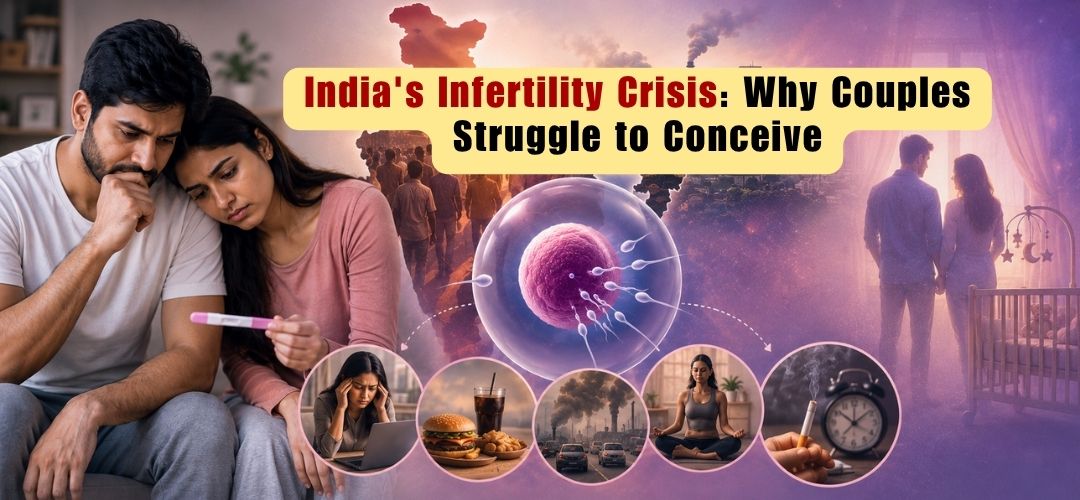
India is simultaneously one of the world’s most populous nations and one experiencing a rapid rise in infertility. Understanding the forces driving this trend is the first step toward addressing it.
The image most people carry of India’s reproductive landscape is shaped by decades of population policy – a country wrestling with too many births, not too few. That framing is increasingly outdated. While India’s total fertility rate has fallen below replacement level in most states, a different and largely unacknowledged crisis is running in parallel: a significant and accelerating rise in infertility among couples of reproductive age.
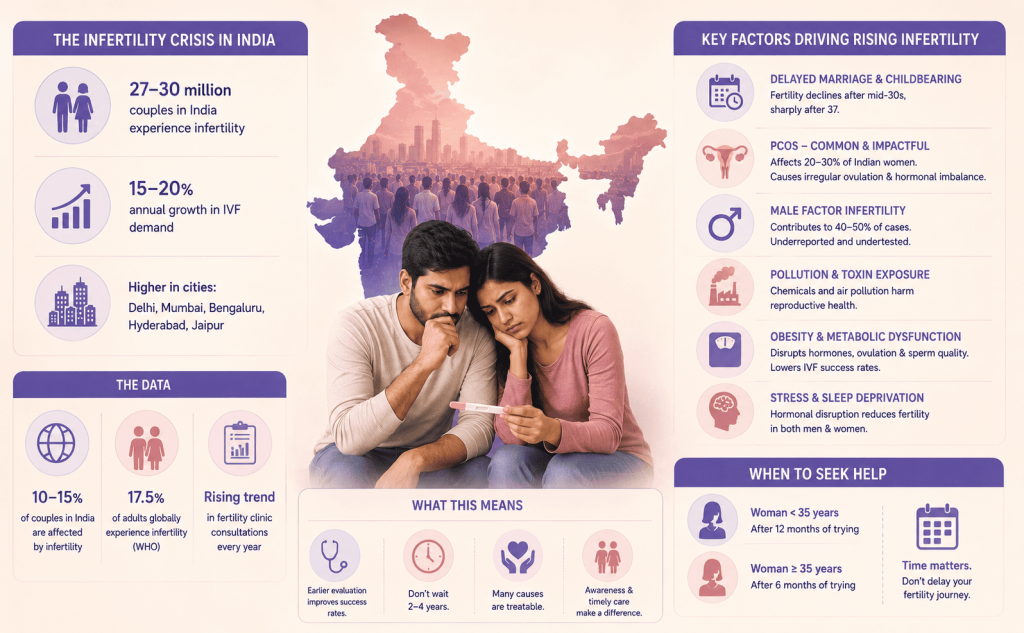
On World Population Day 2026, the conversation about India’s demographic future cannot be complete without addressing the estimated 27 to 30 million couples in India who are currently experiencing some form of infertility. This is not a fringe statistic. It represents a substantial proportion of the country’s reproductive-age population, and the numbers are growing.
What the Data Actually Shows
The World Health Organization defines infertility as the failure to achieve a clinical pregnancy after 12 months or more of regular unprotected sexual intercourse. By this definition, studies conducted across Indian populations estimate that infertility affects between 10 and 15 percent of couples. The Indian Society for Assisted Reproduction has documented a year-on-year increase in couples seeking fertility evaluation, with demand for IVF growing at an estimated 15 to 20 percent annually.
Importantly, this rise is not uniform. Urban populations show higher rates of infertility than rural ones – a pattern that reflects the lifestyle and environmental differences between these settings. Cities including Delhi, Mumbai, Bengaluru, Hyderabad, and Jaipur consistently show the highest concentrations of infertility clinic consultations.
WHO estimate: Approximately 17.5 percent of adults globally experience infertility at some point in their reproductive lives – placing it among the most common medical conditions worldwide.
The Factors Driving Rising Infertility in India
Delayed marriage and childbearing
The average age of marriage in India has risen considerably over the past two decades – particularly in urban and semi-urban populations. With delayed marriage has come delayed childbearing. Female fertility declines meaningfully from the mid-thirties onward, with a more pronounced decline after 37. A couple who might have conceived without difficulty at 24 may face significant challenges at 34 – not because anything has gone wrong medically, but because age-related changes in egg quality and quantity are a biological reality that no lifestyle intervention can fully overcome.
Polycystic ovary syndrome – India’s most prevalent female fertility condition
PCOS is estimated to affect 20 to 30 percent of Indian women of reproductive age – among the highest prevalence rates in the world. The condition disrupts ovulation, creates hormonal imbalance, and significantly increases the time required to conceive naturally. The drivers of PCOS in India include insulin resistance linked to dietary patterns, sedentary lifestyle, disrupted sleep cycles, and genetic predisposition. Unlike many other infertility factors, PCOS is manageable – but it requires diagnosis and intervention.
Male factor infertility – the underreported half
In India, infertility has historically been framed as a female issue – a narrative that is both medically inaccurate and socially damaging. Studies consistently show that male factor infertility contributes to approximately 40 to 50 percent of all infertility cases, either as the primary cause or as a contributing factor.
Declining sperm counts are a documented global phenomenon, and in India, tobacco use, alcohol consumption, occupational heat exposure, and increasing rates of varicocele are all contributing. The reluctance of men to undergo fertility evaluation remains a significant barrier to timely diagnosis and treatment.
Environmental pollution and endocrine disruption
India’s rapid industrial and urban expansion has been accompanied by rising exposure to environmental toxins – air pollutants, heavy metals, pesticide residues, and endocrine-disrupting chemicals found in plastics and personal care products.
These compounds interfere with hormonal signalling in both male and female reproductive systems. Research has linked high particulate matter exposure – a daily reality in many Indian cities – to reduced ovarian reserve, poorer sperm parameters, and lower IVF success rates.
Obesity and metabolic dysfunction
India is now home to the world’s third largest population of people with obesity. Excess body weight disrupts hormonal balance – elevating oestrogen, suppressing testosterone in men, worsening insulin resistance, and impairing ovulation in women.
Both male and female fertility are measurably affected by obesity, and IVF success rates are lower in patients with significantly elevated BMI. The interplay between India’s changing dietary patterns, reduced physical activity, and rising rates of obesity and type 2 diabetes creates a compounding fertility burden.
Stress and sleep deprivation
Chronic psychological stress elevates cortisol, suppresses reproductive hormones, and disrupts the hypothalamic-pituitary-ovarian axis – the hormonal cascade that governs ovulation. India’s urban workforce, characterised by long working hours, long commutes, and compressed sleep, represents a population under sustained physiological stress. The impact on fertility is real, even if it is harder to quantify than a sperm count or AMH level.
What This Means for Couples and for Healthcare
The rise in infertility in India is not an inevitable or irreversible trend. Many of its drivers – PCOS management, tobacco cessation, weight management, earlier evaluation after 6 months of trying in women over 35 – are addressable. The problem is that awareness remains low, stigma remains high, and many couples delay seeking help for two to four years after they first suspect a problem.
Earlier evaluation is the single most impactful behavioural change available. A couple who seeks fertility assessment at 32 has significantly more options – and higher success rates – than one who presents at 38 after years of waiting and hoping.
At Nishant IVF and Fertility Centre in Jaipur, we see the impact of India’s infertility trend every day – in the growing number of couples who come to us, and in the increasing complexity of cases that have been delayed by stigma, misinformation, or simple unawareness of what fertility medicine can offer. World Population Day is an opportunity to change that conversation.
If you have been trying to conceive for 12 months (or 6 months if you are over 35), do not wait longer. A fertility evaluation is not a last resort – it is the most informed next step. Contact Nishant IVF at +91 99502 84285 or visit www.nishantivfcare.com
Infertility Crisis - Why Couples Struggle to Conceive : FAQs
India is believed to have between 27 and 30 million infertile couples, representing approximately 10 to 15 percent of couples of reproductive age. Demand for fertility treatment is growing at 15 to 20 percent annually, with urban populations consistently showing higher infertility rates than rural ones.
The most prevalent causes include polycystic ovary syndrome (PCOS) – affecting an estimated 20 to 30 percent of Indian women of reproductive age – as well as tubal blockage from pelvic inflammatory disease, endometriosis, thyroid disorders, premature ovarian insufficiency, and age-related decline in egg quality and quantity.
Yes. Studies consistently show declining sperm counts in Indian men, attributable to tobacco use, alcohol consumption, occupational heat exposure, sedentary lifestyle, and increasing exposure to environmental toxins and endocrine-disrupting chemicals. Male factor infertility now contributes to 40 to 50 percent of cases – yet many men delay evaluation due to social stigma.
Couples under 35 who have been trying to conceive for 12 months without success should seek a fertility evaluation. Women over 35 should seek evaluation after 6 months. Anyone with a known risk factor – irregular periods, previous pelvic surgery, known PCOS or endometriosis, or a partner with known sperm concerns – should consult a specialist without waiting for these timelines.
Research increasingly links air pollution – particularly fine particulate matter (PM2.5) – to reduced ovarian reserve, lower sperm quality, and poorer IVF outcomes. Industrial chemicals, pesticide residues, and endocrine-disrupting compounds in plastics and personal care products further compound the hormonal environment for urban Indian couples.
Disclaimer: This article provides educational information about Infertility Crisis – Why Couples Struggle to Conceive and should not replace personalized medical advice. Consult with a qualified fertility specialist for proper evaluation and treatment recommendations specific to your situation.