
Hypertension affects over 200 million adults in India. For couples planning IVF, managing blood pressure is not just a heart health issue - it directly affects treatment safety and the chance of a successful pregnancy.
When couples prepare for IVF, blood pressure is rarely the first thing that comes to mind. Conversations tend to focus on egg count, sperm quality, and hormone levels. Yet elevated blood pressure – even at levels considered borderline – can have a quiet but significant impact on fertility treatment, embryo transfer outcomes, and the health of a pregnancy once it is achieved.
On World Hypertension Day, it is worth understanding exactly how blood pressure fits into the fertility picture.
How Hypertension Affects Female Fertility
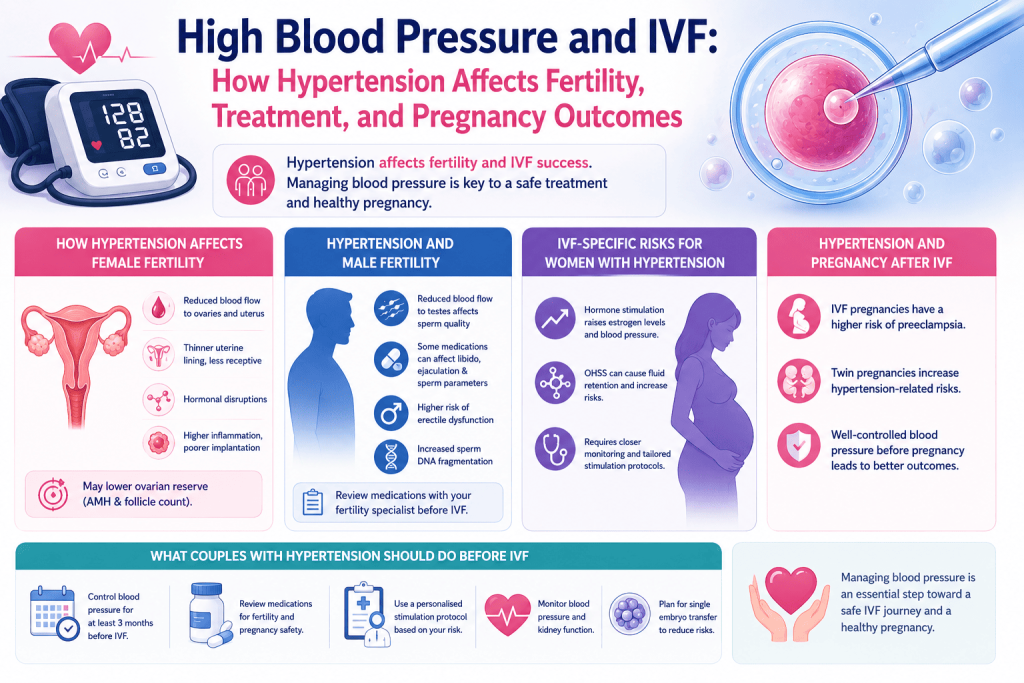
Blood pressure influences reproductive health through several interconnected pathways. Elevated blood pressure reduces blood flow to the ovaries and uterus – the two organs most critical to IVF success. The consequences can include:
- Reduced ovarian blood flow, leading to fewer mature eggs during stimulation
- Impaired endometrial development, making the uterine lining thinner and less receptive
- Hormonal disruption, particularly affecting estrogen and progesterone regulation
- Higher baseline inflammation, which negatively affects implantation
Women with chronic hypertension also tend to have a lower ovarian reserve, measured by lower AMH levels and reduced antral follicle counts – making careful stimulation planning particularly important.
Hypertension and Male Fertility
The impact of high blood pressure on male fertility is frequently underestimated. Hypertension reduces blood flow to the testes, which directly affects sperm production and quality. Additionally:
- Antihypertensive medications – particularly beta-blockers and certain diuretics – are known to affect libido, ejaculation, and sperm parameters
- Erectile dysfunction is significantly more common in men with hypertension, adding psychological as well as physical barriers
- Oxidative stress associated with chronic hypertension increases sperm DNA fragmentation
If a male partner is on antihypertensive medication, this should be reviewed by the fertility specialist before an IVF cycle begins. In some cases, medication can be adjusted or supplemented to minimise impact on sperm quality.
IVF-Specific Risks for Women with Hypertension
IVF involves hormonal stimulation that can temporarily alter cardiovascular physiology. For women with pre-existing hypertension, this creates specific considerations:
Important note: Ovarian hyperstimulation syndrome (OHSS) – a potential complication of IVF stimulation – is associated with fluid shifts and increased vascular permeability, which poses additional risk for women with elevated blood pressure.
The stimulation phase of IVF involves a significant rise in oestrogen, which affects blood vessel tone. Women with hypertension require closer monitoring during this phase and may benefit from modified, lower-stimulation protocols that reduce the risk of OHSS while still producing sufficient egg numbers.
Hypertension and Pregnancy After IVF
The relationship between hypertension and pregnancy complications is well established, but it is particularly relevant for IVF pregnancies because:
- IVF pregnancies already carry a modestly elevated risk of preeclampsia – a serious blood pressure complication in pregnancy
- Twin pregnancies, which are more common in IVF (though single embryo transfer is now standard practice at reputable centres), further increase hypertension-related risks
- Women who enter pregnancy with controlled hypertension are significantly more likely to have uncomplicated pregnancies than those with uncontrolled or undiagnosed high blood pressure
Preconception blood pressure management is therefore not just about cardiovascular health – it is an active component of preparing for a safe IVF pregnancy.
What Couples with Hypertension Should Do Before IVF
- Achieve stable blood pressure control for at least 3 months before beginning stimulation
- Ensure antihypertensive medications are reviewed for fertility safety – some are contraindicated in pregnancy
- Discuss a personalised stimulation protocol with the fertility specialist based on cardiovascular risk
- Request monitoring of blood pressure and kidney function throughout the stimulation phase
- Plan for single embryo transfer where possible to reduce the risk of a twin pregnancy and associated complications
At Nishant IVF and Fertility Centre in Jaipur, patients with hypertension or other cardiovascular risk factors receive a treatment plan that is developed in coordination with their medical history. A fertility journey is not one-dimensional, and managing the full clinical picture – including blood pressure – is central to how we approach every case.
If you have been diagnosed with hypertension and are planning IVF, do not treat them as separate concerns. Bring your complete medical history to your fertility consultation and ensure your specialist is treating you as a whole person, not just a set of reproductive numbers.
Consultation: To discuss IVF with a history of hypertension, contact Nishant IVF and Fertility Centre at +91 99502 84285 or visit www.nishantivfcare.com
FAQs
Yes, but blood pressure should be controlled for at least 3 months before starting IVF. Your fertility specialist must review your antihypertensive medications, as some are unsafe in pregnancy.
Yes. Reduced ovarian blood flow from hypertension can lower the number of mature eggs retrieved and affect overall stimulation response.
Yes. Women with hypertension have a higher risk of preeclampsia in pregnancy. With IVF, this risk is managed through careful monitoring and single embryo transfer.
Yes. Hypertension in men reduces testicular blood flow and can increase sperm DNA fragmentation. Some anti hypertensive medications also affect sperm quality.
Disclaimer: This article provides educational information about High Blood Pressure and IVF and should not replace personalized medical advice. Consult with a qualified fertility specialist for proper evaluation and treatment recommendations specific to your situation.