
When couples struggle to conceive, the focus often turns to conventional fertility tests like semen analysis. However, there’s a critical aspect of male reproductive health that standard tests frequently miss: sperm DNA fragmentation. This hidden factor affects countless couples experiencing unexplained infertility, recurrent pregnancy loss, and repeated IVF failures. Understanding what DNA fragmentation means for your fertility journey could be the key to finally achieving your dream of parenthood.
What Is Sperm DNA Fragmentation?
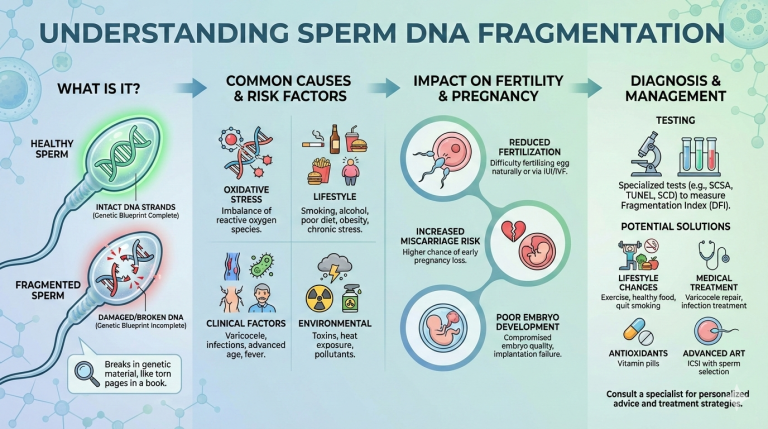
Sperm DNA fragmentation refers to breaks or damage in the genetic material carried within sperm cells. Think of DNA as a tightly wound instruction manual that contains all the genetic information needed to create new life. When this manual has missing pages or torn sections, it becomes difficult for cells to follow the instructions properly.
In healthy sperm, DNA strands are tightly coiled and protected by specialized proteins. However, various factors can cause these protective structures to weaken, leaving the DNA vulnerable to damage. The DNA fragmentation index (DFI) measures the percentage of sperm with damaged DNA in a semen sample. Research indicates that men with elevated DFI levels face significantly reduced chances of natural conception and lower success rates with assisted reproductive technologies.
Why Standard Semen Analysis Isn't Enough
Traditional semen analysis examines sperm count, motility, and morphology. While these factors provide valuable information about sperm production and basic function, they cannot detect DNA-level damage. Approximately 25 to 30 percent of couples receive a diagnosis of unexplained infertility, where routine testing reveals no apparent issues. Many of these cases involve elevated sperm DNA fragmentation that goes undetected by standard analysis.
A man can have normal sperm parameters yet still carry high levels of DNA damage that prevents successful conception or leads to early pregnancy loss. This explains why some couples experience repeated IVF failures despite seemingly healthy sperm.
The Major Causes of DNA Fragmentation
Oxidative Stress: The Primary Culprit
Oxidative stress represents the leading cause of sperm DNA fragmentation. This occurs when unstable molecules called free radicals accumulate faster than the body’s antioxidant defenses can neutralize them. Sources include infections, inflammation in the reproductive tract, and prolonged exposure to environmental toxins.
Age-Related Decline
Research demonstrates  that men over 50 years old show DNA fragmentation indices averaging 47.7 percent, compared to 35.6 percent in men under 30. As men age, several factors contribute to increased DNA damage: diminished cellular repair mechanisms, accumulated oxidative damage, and declining mitochondrial function.
Lifestyle and Environmental Factors
Numerous modifiable factors significantly impact DNA fragmentation levels:
Smoking: Tobacco use dramatically increases oxidative stress and reduces the body’s ability to combat free radicals.
Obesity: Men with body mass index above 25 demonstrate reduced DNA integrity.
Heat Exposure: Elevated testicular temperature from laptop computers on the lap, hot tubs, saunas, or tight clothing damages developing sperm.
Alcohol: Excessive intake contributes to oxidative stress and poor sperm DNA quality.
Poor Nutrition: Diets high in processed foods and low in antioxidant-rich fruits and vegetables compromise sperm protection.
Environmental Toxins: Exposure to pesticides, industrial chemicals, air pollution, and endocrine-disrupting compounds increases DNA damage risk.
Medical Conditions
Varicocele: Enlarged veins in the scrotum create localized heat and oxidative stress, significantly damaging sperm DNA.
Infections: Bacterial or viral infections trigger inflammation and oxidative damage that may persist even after treatment.
Chronic Diseases: Conditions like diabetes affect sperm quality through increased oxidative stress and impaired cellular function.
Cancer Treatment: Chemotherapy and radiation therapy cause substantial DNA damage to rapidly dividing cells, including developing sperm.
The Impact on Fertility and Pregnancy Outcomes
Natural Conception and ART Success
Men with high fragmentation indices experience significantly longer times to natural conception. Studies reveal that live birth rates with IVF decline progressively as fragmentation levels rise: from 33 percent in men with fragmentation below 25 percent, to 24 percent with fragmentation between 25 and 50 percent, and down to just 13 percent when fragmentation exceeds 50 percent.
ICSI: A Partial Solution
ICSI (Intracytoplasmic sperm injection) offers better outcomes for couples dealing with high DNA fragmentation compared to conventional IVF. However, high fragmentation still impacts embryo quality, development to the blastocyst stage, and implantation success.
Miscarriage Risk
Meta-analyses demonstrate that sperm DNA damage approximately doubles the risk of miscarriage. Men whose partners experience recurrent pregnancy loss show significantly higher fragmentation levels than men whose partners deliver healthy babies.
Testing for DNA Fragmentation
Several laboratory methods can assess sperm DNA integrity:
TUNEL Test: Detects actual breaks in DNA strands, identifying both single and double-strand breaks.
Sperm Chromatin Structure Assay (SCSA): Measures DNA susceptibility to acid-induced denaturation, providing a DNA fragmentation index.
Comet Assay: Visualizes DNA damage by creating a “comet tail” of fragmented DNA when cells undergo electrophoresis.
Sperm Chromatin Dispersion (SCD): Evaluates the ability of sperm DNA to disperse when exposed to acid treatment.
Who Should Consider Testing?
Specific situations strongly recommend DNA fragmentation assessment:
- Couples with unexplained infertility despite normal semen parameters
- Recurrent pregnancy loss (two or more miscarriages)
- Failed IVF or ICSI cycles with no clear female factor explanation
- Poor embryo quality in previous ART attempts
- Known varicocele or history of genital infections
- Advanced paternal age (over 45 years)
- Lifestyle or occupational exposure to toxins, heat, or radiation
Treatment Options and Improving Outcomes
Many causes of DNA fragmentation are modifiable, offering opportunities to improve sperm quality.
Lifestyle Modifications
Quit Smoking: Cessation allows oxidative stress levels to decline and antioxidant defenses to recover.
Achieve Healthy Weight: Weight loss in overweight or obese men improves sperm DNA integrity.
Reduce Heat Exposure: Avoid hot tubs, saunas, and prolonged laptop use on the lap.
Improve Diet: Emphasize fresh fruits and vegetables rich in vitamins C and E, selenium, and other antioxidants.
Limit Alcohol: Moderate or eliminate consumption to reduce oxidative stress.
Manage Stress: Incorporate stress-reduction techniques like exercise, meditation, or counseling.
Medical Interventions
Antioxidant Supplementation: Targeted use of vitamins C and E, coenzyme Q10, and other antioxidants may reduce DNA fragmentation. Studies show improvements after 10 to 12 weeks of supplementation.
Varicocele Repair: Surgical correction improves sperm DNA integrity in many cases.
Treat Infections: Appropriate antimicrobial therapy reduces inflammation and oxidative stress.
Optimize Chronic Disease Management: Better control of conditions like diabetes reduces oxidative damage to sperm.
Advanced Reproductive Techniques
Testicular Sperm Extraction: For men with persistently high fragmentation in ejaculated sperm, testicular sperm shows significantly lower damage rates. Live birth rates reach 46.7 percent with testicular sperm versus 26.4 percent with ejaculated sperm in men with high DNA damage.
Shorter Abstinence Periods: Shorter abstinence times before providing samples for ART may improve DNA integrity.
Advanced Sperm Selection: Techniques like microfluidic sperm sorting preferentially identify sperm with better DNA integrity.
Finding Specialized Care
Successfully navigating male factor infertility requires specialized expertise. When searching for a “male fertility specialist near me” or “fertility clinic near me” prioritize centers with dedicated andrology laboratories capable of performing advanced sperm DNA testing.
Look for fertility specialists who offer comprehensive male fertility evaluation beyond basic semen analysis, provide DNA fragmentation testing using validated laboratory methods, develop individualized treatment plans addressing specific causes of DNA damage, and coordinate closely with reproductive endocrinologists for couples requiring ART.
For couples in need of comprehensive fertility evaluation and treatment, Dr. Nishant Dixit at Nishant IVF & Fertility Clinic offers advanced assessment of male fertility factors including DNA fragmentation testing. With expertise in both diagnosis and treatment of complex fertility issues, Dr. Dixit helps couples understand all factors affecting their ability to conceive and develops personalized treatment approaches designed to optimize success rates. The clinic provides access to cutting-edge reproductive technologies, including ICSI and advanced sperm selection techniques.
Moving Forward With Knowledge and Hope
DNA fragmentation represents a significant but often overlooked factor in male infertility. While elevated fragmentation poses challenges to conception and pregnancy success, many underlying causes are treatable. Through lifestyle modifications, medical interventions, and appropriate use of assisted reproductive technologies, couples can overcome DNA fragmentation and achieve their family-building goals.
By identifying and addressing DNA damage, couples avoid months or years of unsuccessful attempts based on incomplete information. If you’re experiencing difficulties conceiving or have faced pregnancy losses, consider whether DNA fragmentation testing might provide the answers you’ve been seeking. With proper diagnosis and treatment, the path to parenthood becomes clearer and more achievable.
Disclaimer: This article provides educational information about sperm DNA fragmentation and should not replace personalized medical advice. Consult with a qualified fertility specialist to discuss your specific situation and determine appropriate testing and treatment options.